

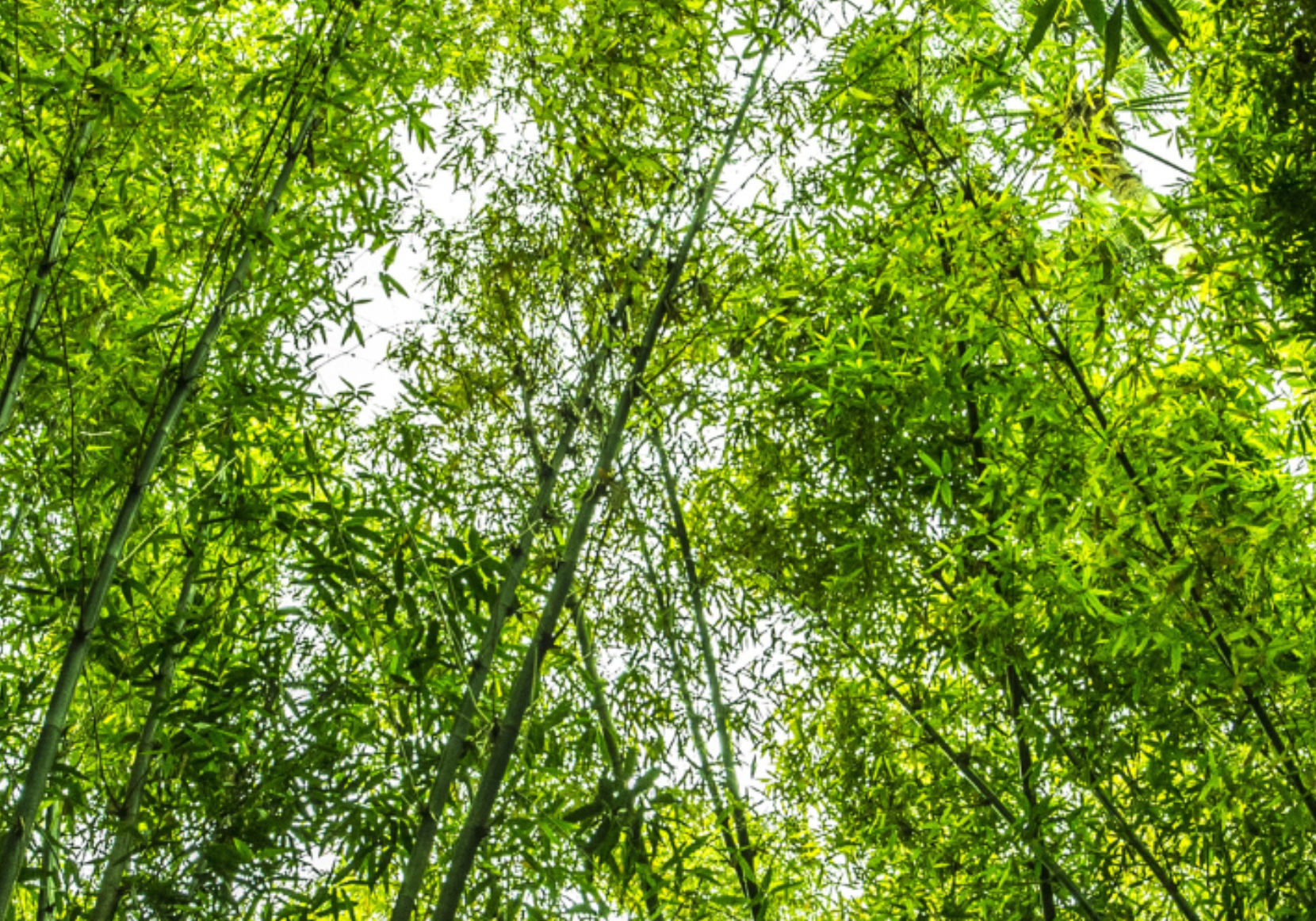
In brief: Bamboo is not wood but grass, and one of the fastest-growing plants in the world. As a solid material, it is light, flexible and strong, making it ideal for lampshades, furniture and kitchen utensils. Two things call for caution: tableware sold as bamboo tableware is usually plastic with bamboo fibres, while bamboo fabric is generally viscose. Here, you'll learn how to recognise real bamboo and where it performs best in the home.
What bamboo is
Botanically, bamboo belongs to the grass family. It produces woody stems that are hollow inside and divided by nodes. This structure makes it light yet resistant to bending, which is why it has been used in Asia for scaffolding, houses and bridges for centuries. Because bamboo produces new stems from its rootstock, it does not need to be replanted after harvesting.
Three forms in which you encounter bamboo
1. Solid bamboo: stems, strips and woven fibres
Here, bamboo is exactly what it appears to be. The stems are split, dried, bent or woven. This is how lampshades, baskets, chopping boards and furniture are made. It is the most original form and the most interesting one for your home.
2. Bamboo tableware: take care with hot food
Cups and plates sold as bamboo tableware usually consist of melamine-formaldehyde resin, a plastic mixed with bamboo fibres as a filler. The German Federal Institute for Risk Assessment advises against using this type of tableware for hot drinks or food, as high temperatures can cause potentially harmful amounts of melamine and formaldehyde to migrate into food (BfR, press release on bamboo tableware). It is therefore not a good choice for takeaway coffee, soup or baby food.
3. Bamboo fabric: generally viscose
Soft towels, socks and bed linen made from bamboo are almost always viscose. The bamboo is chemically dissolved into cellulose and spun into new fibres. Little remains of the original stem material. That is not a bad thing, but it is different from what the word bamboo might suggest.
Where bamboo shines at home: lighting
Bamboo is particularly well suited to lighting. A lampshade made from bamboo strips or woven fibres lets light filter through the gaps, casts delicate patterns on the walls and ceiling, and gives the light a slightly warm tone. Because the material is light, even large shades are easy to hang.
- Above the dining table: The Kalimantan Bamboo Flat Pendant Light by GOOD&MOJO spreads the light widely across the tabletop.
- In the living room: The Bali Bamboo M Floor Lamp has an angled base and a bamboo shade, creating a large, calming accent in a corner of the room.
- On a sideboard or bedside table: The Bamboo Annapurna Table Lamp stands on bamboo legs and has a white linen shade.
GOOD&MOJO from the Netherlands has been designing lamps from bamboo, ash wood and linen for ten years, reportedly handmade according to the brand. It's about RoMi, also from the Netherlands, launched its first bamboo lamps in the early 2010s. You can find both brands at GOOD&MOJO and It's about RoMi.
How to care for bamboo
- Lampshades: dust them dry with a soft brush or feather duster. Water can cause woven fibres to swell.
- Chopping boards and spoons: wash by hand, dry immediately and rub with cooking oil from time to time. Bamboo can split in the dishwasher.
- Position: do not place it directly next to a radiator. Very dry air can make bamboo brittle.
Frequently asked questions
Is bamboo wood?
No. Bamboo is a grass with woody stems. It behaves similarly to wood when processed, but is lighter and more flexible.
Can I use bamboo tableware for hot drinks?
Not tableware made from bamboo composite, meaning plastic with bamboo fibres. The BfR advises against it because heat can cause melamine and formaldehyde to migrate into the drink.
What is bamboo viscose?
A fibre made from cellulose obtained from bamboo and chemically spun into new fibres. It is soft, but has little in common with a bamboo stem.
Bamboo shows its most beautiful side in the light. You can find our selection of lamps in pendant lights and floor lamps.


