



Herbal hair color
Available in stock
Fewer promises. More knowledge.
 Free shipping within Germany on orders over €59 (up to 20 kg)

Description
Description
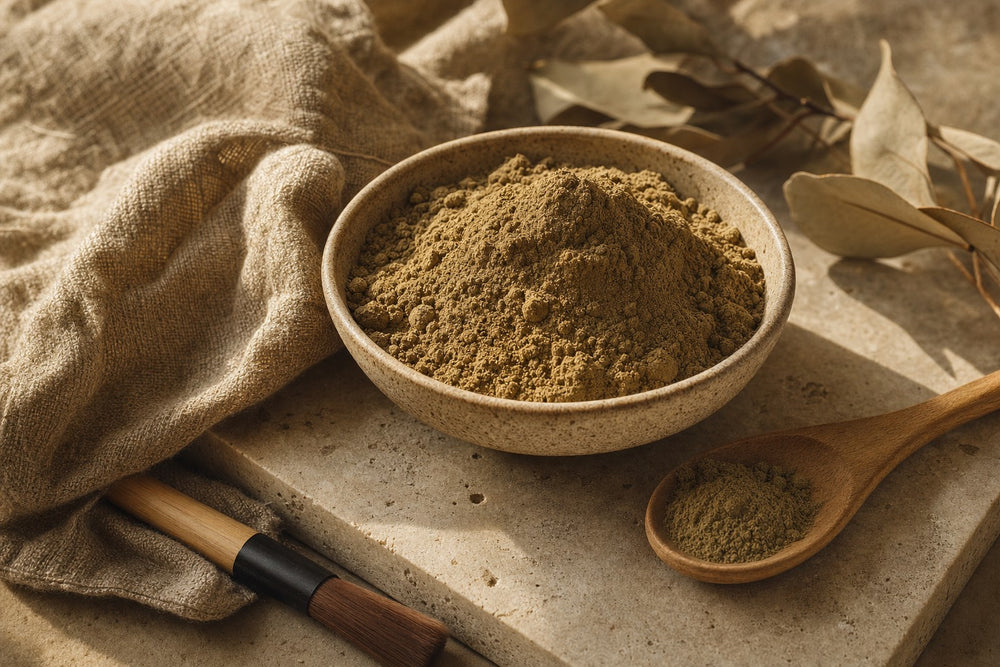
Khadi plant-based hair color provides an intense, natural hair color and strengthens hair from root to tip. The plant pigments coat the outer layer of the hair like a color glaze; the longer the exposure time, the more intense the shade. The color palette ranges from blonde to brown, red, and black.
Khadi plant-based hair color gives you an intense yet natural hair color. The plant-based ingredients strengthen your hair from root to tip. After use, your hair feels nourished and shines healthily. The plant pigments coat the outer layer of your hair like a color glaze. The longer you leave the color in, the more intense the shade becomes. Even gray hair shines with impressive color intensity. Discover the khadi color chart now.
Why this product is great:
- Plant-based hair colors consist of natural ingredients and are therefore free from harmful chemicals such as ammonia, peroxides, and azo dyes.
- They are suitable for most people, including vegans and those with sensitive scalps, as they generally do not cause allergic reactions.
- Plant-based hair colors are known for their nourishing properties, as they not only color the hair but also nourish and strengthen it.
- They provide a natural and gentle color result that doesn't make the hair look unnatural, while also moisturizing the hair.
- Compared to chemical hair dyes, plant-based hair colors often last longer and can protect the hair from external influences such as UV radiation.
- Plant-based hair colors are often available in a variety of shades and can be easily combined to achieve individual color tones.
- No synthetic additives such as colorants, fragrances, preservatives, peroxides, ammonia, or color enhancers.
- Regular independent review in qualified laboratories.
- Certified according to the international COSMOS-standard AISBL by the German Association of Industrial and Trading Companies (BDIH).
Details
Details
Couldn't load pickup availability
Brand
khadi
Since 2007, khadi has been making herbal hair dyes and care products in Germany based on Ayurvedic formulas. The dye comes as a powder to be mixed with hot water. At Taiga, you can find herbal hair dye in shades from blonde to black, as well as Color Prep powder for pre-pigmentation.