



Iron Spirulina 100 Tablets
Hurry up, only 4 items left in stock.
Fewer promises. More knowledge.
 Free shipping within Germany on orders over €59 (up to 20 kg)

Description
Description
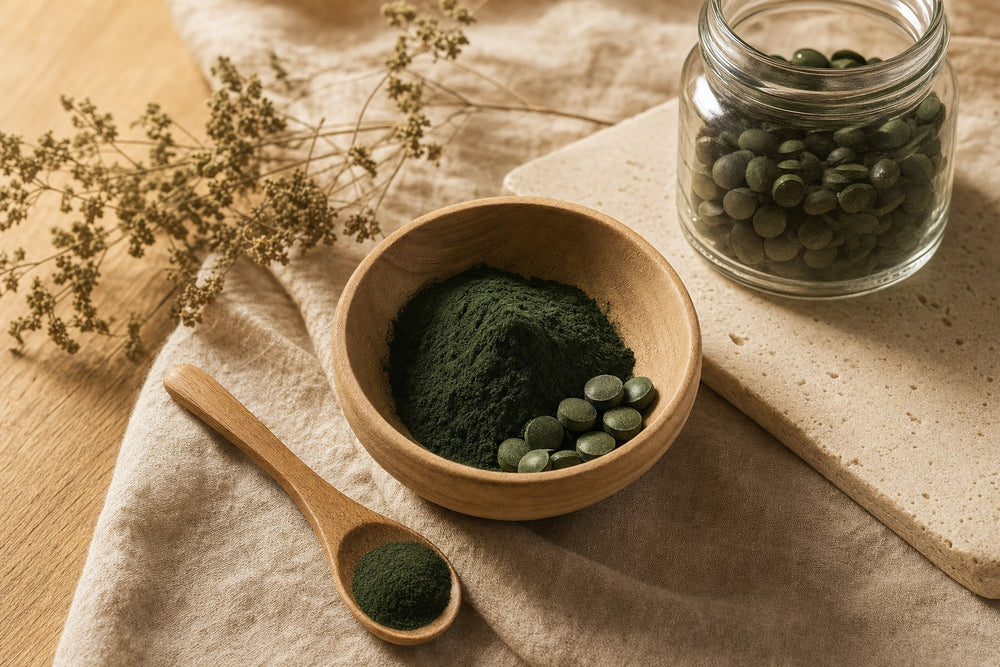
Sanatur IronSpirulina 100 tablets are created by the natural accumulation of the trace element iron in the microalgae Spirulina during its growth process. Approximately 2.5 to 4 g of iron are stored in the human body, with 2/3 of it bound in hemoglobin.
IronSpirulina 100 tablets from Sanatur
Iron is an important trace element.
The hemoglobin value is often used to indicate iron content. However, this value does not provide information about the iron content in the body. The level of the hemoglobin value is, for example, crucial for approval for blood donation.
Good sources of iron include offal, lean red meat, poultry, fish, and shellfish. Other iron sources are legumes, nuts and seeds, whole grain products, and green vegetables.
Why this product is great:
- Suitable for adults, children, seniors, and athletes
- Especially for children and adolescents during growth; pregnant women; breastfeeding women; people with low iron or hemoglobin levels in the blood
- Important for energy metabolism, oxygen transport, blood formation, immune system, and mental (cognitive) abilities
- Raw food quality
- Iron contained in Spirulina, not added after harvest
- 100% Spirulina platensis microalgae
- Gluten-free, Lactose-free & Iodine-free
- Without any additives
- Vegan
- Cultivated in safe pure culture
- ISO certified partner algae farm
- EVERY batch of EisenSpirulina is independently checked in Germany for: heavy metals, algal toxins, irradiation, bacteria, pesticides, radioactivity, PAHs
The trace element iron is a component of our daily diet and contributes to:
- Normal oxygen transport in the body
- Normal energy metabolism
- Reduction of tiredness and fatigue
- Normal function of the immune system
- Normal formation of red blood cells and hemoglobin
- Normal cognitive function
Details
Details
Safety Instructions
Safety Instructions
Couldn't load pickup availability
Brand
Sanatur
Sanatur, based in Singen am Hohentwiel, has been offering food supplements since 1983, including Spirulina and Chlorella from an algae farm in southern Taiwan. At Taiga, you can find microalgae, minerals, vitamins and plant extracts as tablets, capsules and powders.